Buying Good uPVC Windows? Don’t Let These 7 Installation Mistakes Ruin Them
Contact Us Let’s Help You Find the Perfect uPVC Solution! Fill in your details and our team will get in…
Let’s Help You Find the Perfect uPVC Solution!
Fill in your details and our team will get in touch with you shortly.
Contact Us Let’s Help You Find the Perfect uPVC Solution! Fill in your details and our team will get in…
Contact Us Let’s Help You Find the Perfect uPVC Solution! Fill in your details and our team will get in…
Contact Us Let’s Help You Find the Perfect uPVC Solution! Fill in your details and our team will get in…
Choosing uPVC windows for your home is not only about selecting the right material. The style and opening mechanism are equally important.
A window in your bedroom may need maximum ventilation, while the window in your living room may need a wider glass area and easy operation. In a compact apartment, saving space may be the priority. For a high-rise home, controlled ventilation and easy cleaning may matter more.
This is why there is no single uPVC window style that is perfect for every room.
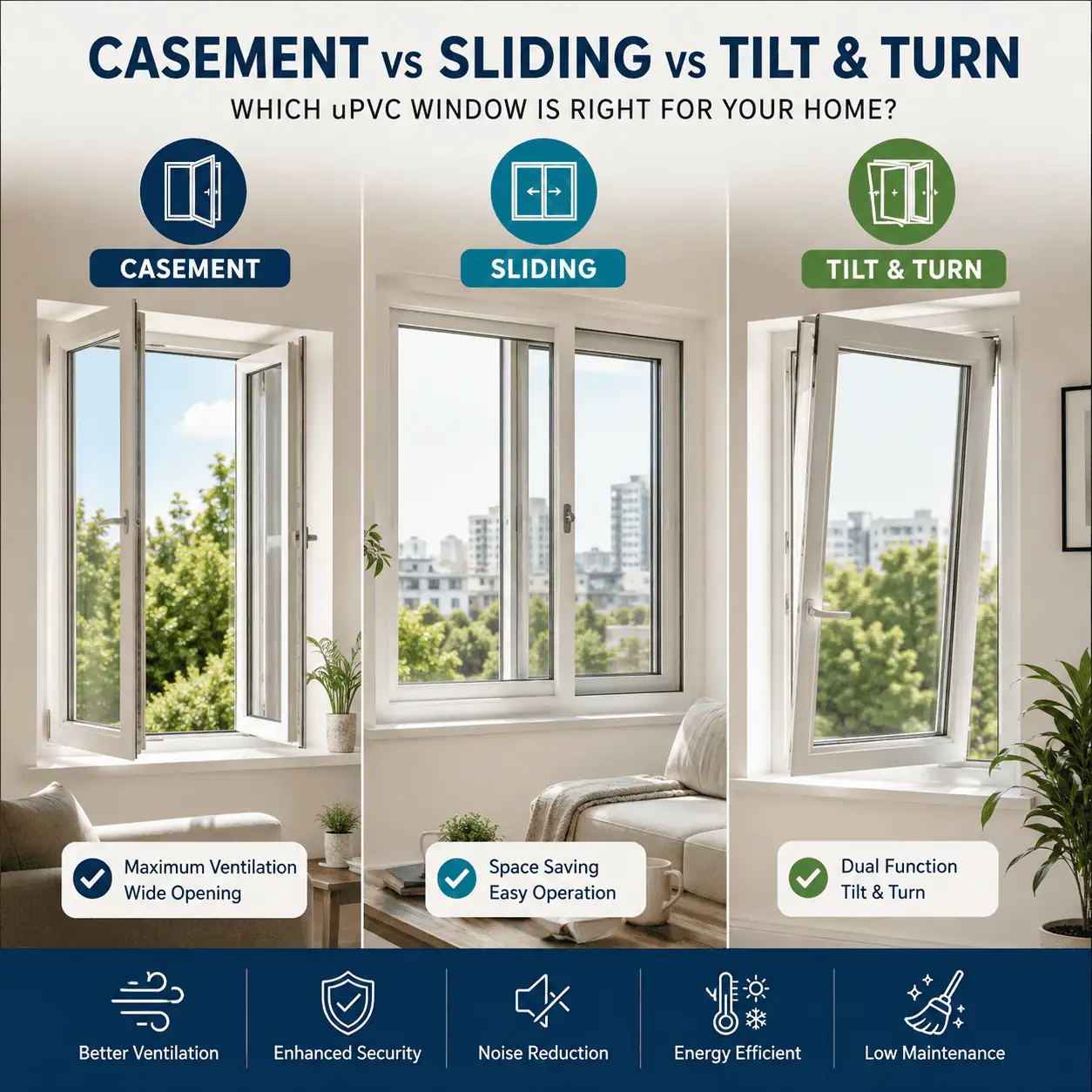
Three popular options are casement, sliding, and tilt & turn uPVC windows. Each has a different opening mechanism and is suited to different requirements.
So, which one should you choose?
Let’s compare them.
Casement windows are hinged on one side and open outward. Depending on the configuration, they can be designed as single or multiple opening panels.
They are a popular choice for bedrooms, living rooms, kitchens and independent homes because they provide a large opening for ventilation.
Why choose casement windows?
Excellent ventilation
When the sash is opened, a large portion of the window can be opened to allow fresh air into the room. This makes casement windows particularly useful where natural ventilation is important.
Good sealing
When closed, the sash presses against the frame and seals tightly. With suitable profiles, gaskets and hardware, this can help reduce the entry of outside air, dust and noise.
Wide range of applications
Casement windows work well in bedrooms, living rooms, villas and other areas where there is sufficient clearance for the window to open.
Casement windows are a good choice if:
Windowfort offers uPVC openable window solutions that can be customized according to the opening and requirements of your home.
Sliding windows operate differently. Instead of swinging open, the panels move horizontally along a track.
This makes them particularly useful in apartments and compact rooms where you don’t want the window to occupy additional space when opened. Windowfort’s sliding window systems are designed around this space-saving principle and are suitable for apartments, villas and commercial spaces.
Why choose sliding windows?
Space saving
This is probably their biggest advantage. Since the panels move sideways, there is no inward or outward swing.
This means you can position furniture closer to the window and make better use of the available floor area.
Easy everyday operation
A well-made sliding window can be opened and closed with a simple horizontal movement. This makes it convenient for frequently used windows.
Large glass areas
Sliding configurations can provide generous glazed areas, making them suitable when you want plenty of natural light and a clear outdoor view.
Sliding windows are a good choice if:
You can explore Windowfort’s uPVC Sliding Windows for Bangalore homes here: uPVC Sliding Windows by Windowfort
Tilt & turn windows are slightly different from both casement and sliding windows because they provide two opening functions.
The same window can either tilt inward from the top for controlled ventilation or turn inward from the side for a wider opening.
This dual-opening mechanism makes them particularly versatile.
How does the tilt function work?
In the tilt position, the top of the window opens inward while the lower portion remains in place.
This creates a smaller opening that allows ventilation without fully opening the window.
What happens in the turn position?
The window opens inward from the side, similar to a casement window.
This gives you a much larger opening when you need maximum ventilation or want easier access for cleaning.
Windowfort’s tilt & turn windows are designed around this dual functionality and include features such as multi-point locking, controlled ventilation and inward opening for easier cleaning.
Tilt & turn windows are a good choice if:
Instead of choosing one style for the entire house, think about what each room actually needs.
For bedrooms
Casement or tilt & turn can be excellent choices when ventilation and sealing are important.
If you want controlled ventilation while retaining the option to fully open the window, tilt & turn can be particularly useful.
For living rooms
Both sliding and casement windows can work well.
If you have a wide opening and want a clean view with minimal space usage, sliding windows are a practical option.
If maximum airflow is the priority, casement windows may be preferable.
For apartments
Sliding and tilt & turn windows are particularly practical.
Sliding windows don’t require additional opening space, while tilt & turn windows provide controlled ventilation and easier access for cleaning.
For villas and independent homes
You have more flexibility because space is generally less restrictive.
A combination of casement, sliding and tilt & turn windows can be used depending on the room, opening size and architectural design.
Absolutely.
In fact, using different window styles according to the requirements of each room can be a better approach than installing the same configuration everywhere.
For example:
Bedroom: Casement or tilt & turn
Living room: Sliding or casement
Kitchen: Sliding or casement
Balcony: Sliding
Study room: Casement or tilt & turn
High-rise apartment: Sliding or tilt & turn
The goal is not to find one “best” window. The goal is to find the right window for each space.
The opening style is only one part of the decision.
Before finalizing your uPVC windows, consider:
Glass
Your glass selection affects heat, light, safety and noise performance. Depending on the application, options such as double glazing, toughened glass or laminated glass may be considered.
Hardware
Handles, rollers, hinges and locking systems have a direct impact on everyday operation and long-term reliability.
Sealing
Good-quality gaskets and proper installation are important for reducing air and water leakage.
Reinforcement
The frame and reinforcement should be appropriate for the size and configuration of the window.
Installation
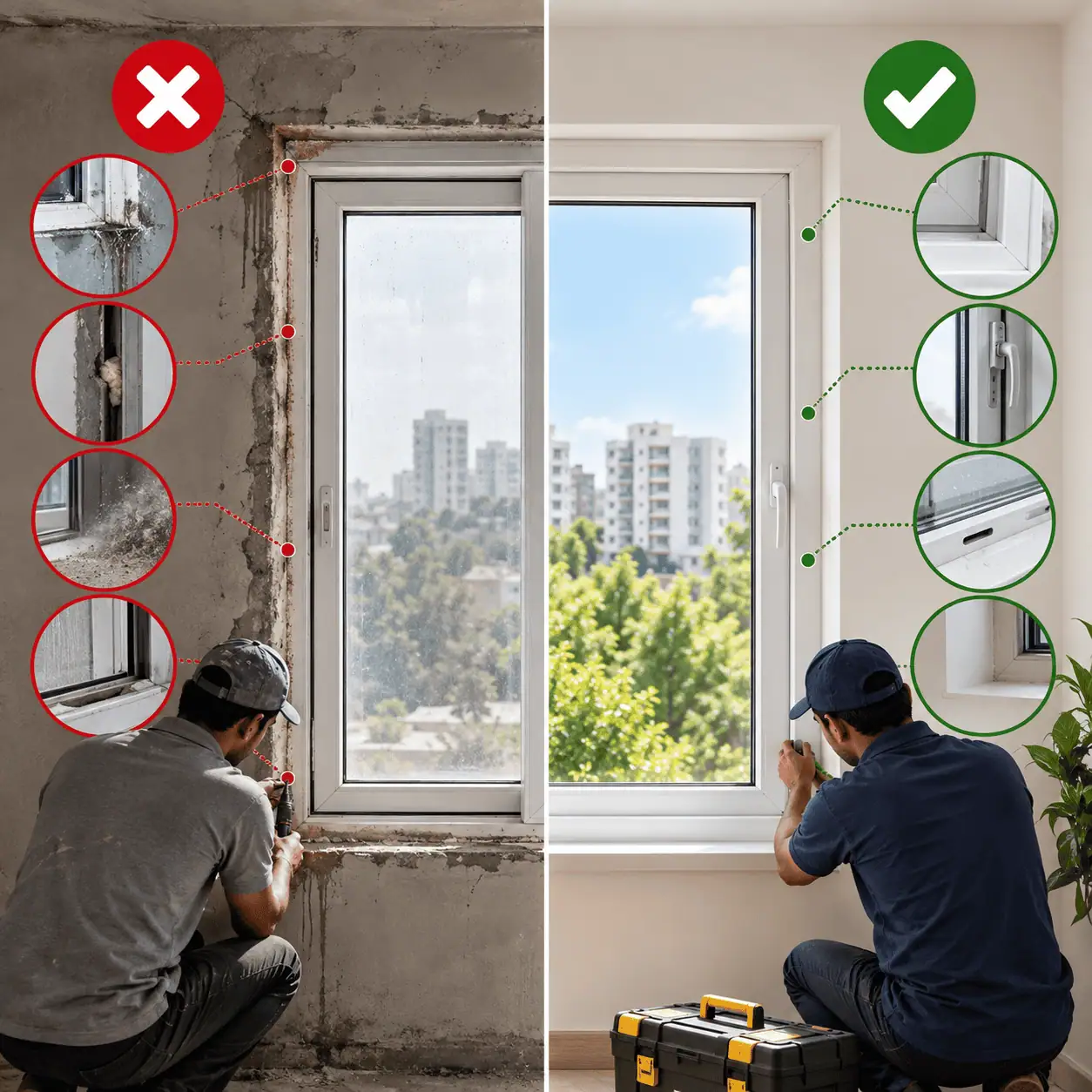
Even a good window can perform poorly if it is measured or installed incorrectly. Accurate site measurements and proper installation are therefore essential.
Once you have selected the right opening style, the uPVC material itself offers several advantages for modern homes.
uPVC is resistant to rust, corrosion, moisture and termites, while requiring relatively little maintenance. It also provides thermal insulation and can be paired with different glass configurations depending on the desired performance.
Windowfort offers multiple uPVC window configurations, including sliding, tilt & turn, combination, top hung and other customized solutions.
There is no universal winner when comparing casement, sliding and tilt & turn uPVC windows.
Choose casement when ventilation and a wide opening are your priorities.
Choose sliding when space efficiency, large glass areas and easy operation matter most.
Choose tilt & turn when you want flexible ventilation, easy cleaning and a versatile opening mechanism.
The best approach is to consider the room, available space, ventilation requirements, security, glass selection and overall design before making a decision.
If you’re planning a new home or replacing existing windows, Windowfort can help you choose a uPVC window configuration based on your home’s requirements.