Tilt and Turn uPVC Windows: How They Work and Why They’re Popular in Modern Homes
Contact Us Let’s Help You Find the Perfect uPVC Solution! Fill in your details and our team will get in…
Let’s Help You Find the Perfect uPVC Solution!
Fill in your details and our team will get in touch with you shortly.
Contact Us Let’s Help You Find the Perfect uPVC Solution! Fill in your details and our team will get in…
Contact Us Let’s Help You Find the Perfect uPVC Solution! Fill in your details and our team will get in…
Contact Us Let’s Help You Find the Perfect uPVC Solution! Fill in your details and our team will get in…
Have you ever wished your windows could offer more than just opening and closing?
Imagine having a window that lets fresh air enter through a small opening when you need ventilation, but can also open fully whenever you want more airflow or need to clean the outside glass.
That’s exactly what makes tilt and turn uPVC windows different.
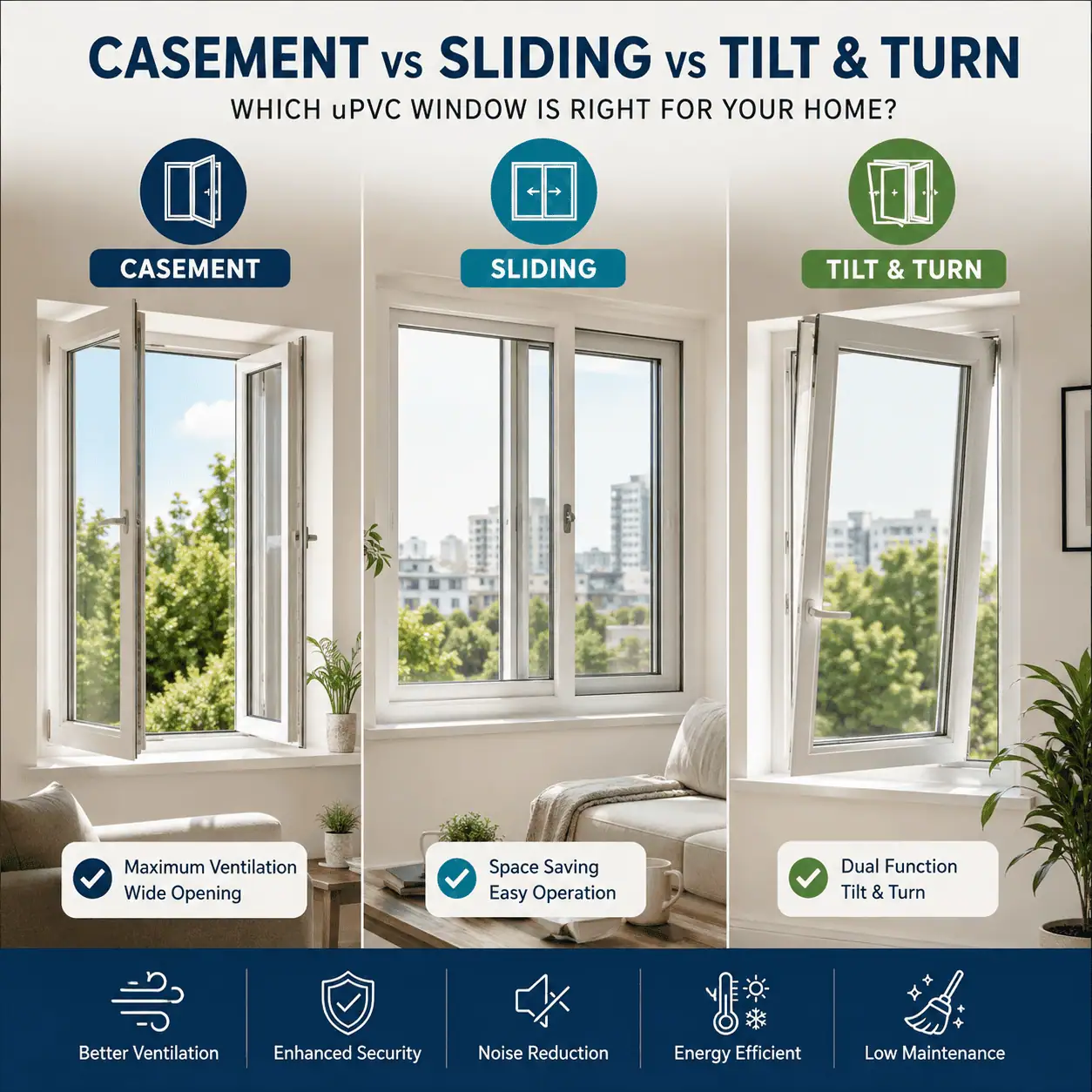
Unlike conventional sliding or casement windows, tilt and turn windows feature a unique dual-opening mechanism that gives homeowners more flexibility. With a single handle, you can choose between two different opening positions.
Originally popular in European homes, this window style is increasingly attracting attention in modern residential architecture because of its functionality, clean appearance and practical advantages.
Let’s understand how tilt and turn windows work and why they might be a good choice for your home.
Tilt and turn windows are a type of uPVC window designed with two opening functions in a single frame.
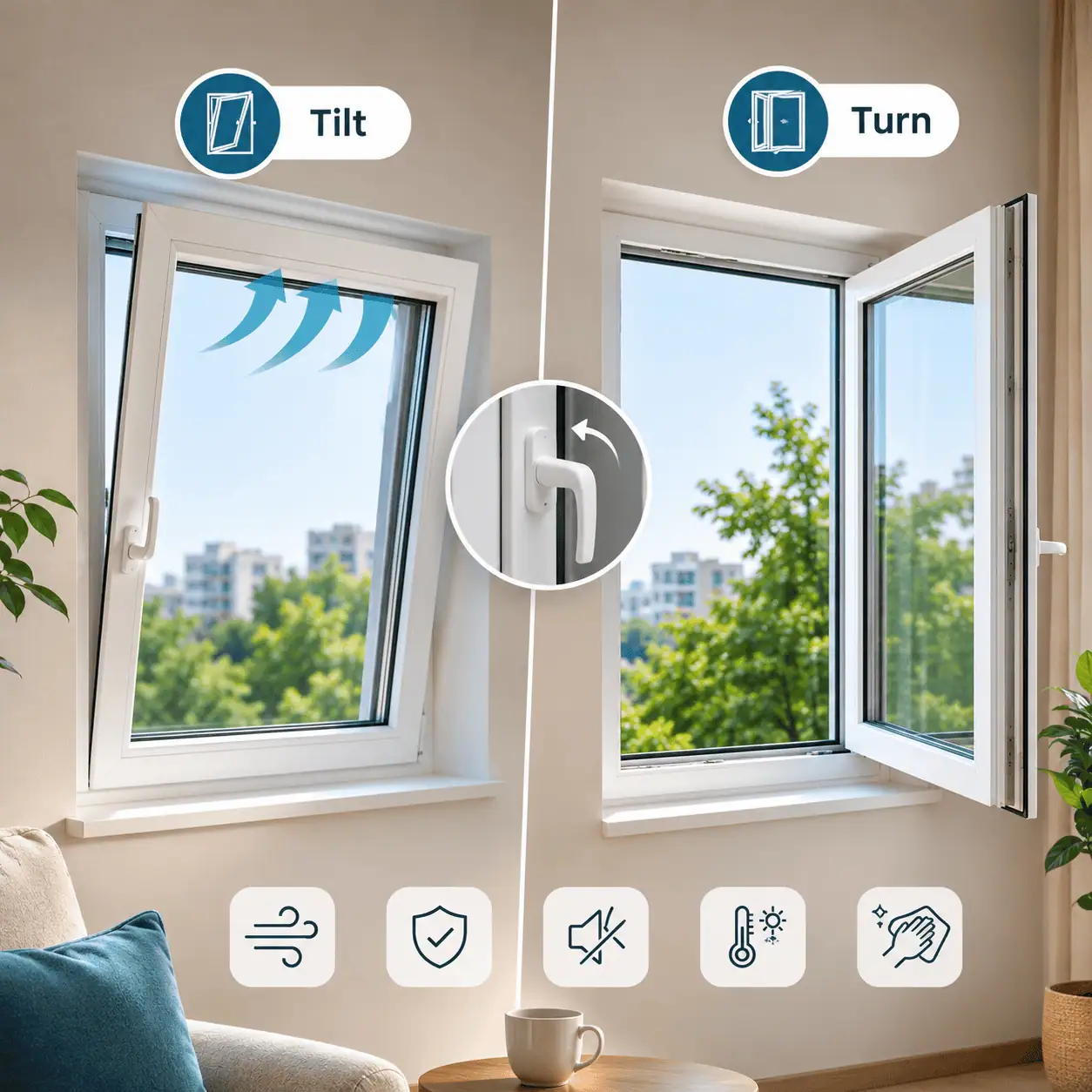
The window can either tilt inward from the top or swing completely inward from the side, depending on how you operate the handle.
This gives you two different ways to use the same window.
Tilt Mode: The upper portion of the window opens inward slightly while the bottom remains connected to the frame. This allows controlled ventilation.
Turn Mode: The entire window sash opens inward from the side, similar to a conventional casement window. This provides a wider opening for ventilation and easier access to the outside glass for cleaning.
The interesting part is that both functions are operated using a single handle.
The mechanism is what makes these windows special.
Unlike ordinary windows with a single opening direction, tilt and turn systems use specialised hinges, locking components and operating hardware to provide two opening options.
A. Tilt Position: For Controlled Ventilation
When you rotate the handle to the designated tilt position, the top of the window moves slightly inward while the bottom remains secured.
This creates a narrow opening that allows fresh air to circulate inside the room.
Why is this useful?
Allows controlled airflow.
Helps ventilate rooms without fully opening the window.
Useful for bedrooms and living spaces.
Provides an alternative to keeping the entire window open.
It is particularly convenient when you want some fresh air without creating a large opening.
B. Turn Position: For Full Opening
When you close the window and move the handle to the designated turn position, the entire sash can swing inward on its side hinges.
This offers several advantages:
Allows a wider opening for ventilation.
Makes cleaning the outside glass easier from indoors.
Provides convenient access to the window surface.
Makes it easier to inspect and maintain the window.
For homeowners living in apartments or upper-floor homes, the ability to clean the outside glass from inside can be especially useful.
Note: The exact handle positions and operating sequence depend on the hardware system. Always follow the manufacturer’s operating instructions and fully close the sash before changing modes.
The popularity of these windows comes from their combination of functionality and modern design.
Here are some of the major advantages.
1. Two Opening Options in One Window
The biggest advantage is flexibility.
You don’t need separate windows for controlled ventilation and a full opening. The same window offers both functions through its dual-action mechanism.
This makes it a practical option for homeowners who want more control over how their rooms are ventilated.
2. Better Control Over Ventilation
Not every situation requires a completely open window.
Sometimes, you simply want fresh air to circulate without opening the entire window.
The tilt function makes this possible by creating a smaller opening at the top.
It can be useful in bedrooms, living rooms and other spaces where controlled ventilation is preferred.
However, tilt mode should not automatically be considered childproof or completely secure. Additional safety features and appropriate supervision may still be necessary.
3. Easier Cleaning and Maintenance
Cleaning exterior window glass can be difficult, particularly in apartments and high-rise buildings.
With tilt and turn windows, the turn function allows the sash to open inward, making both sides of the glass more accessible from inside.
This reduces the need to reach outside to clean the window.
Regular cleaning of the frame, glass, hinges and hardware also helps maintain smooth operation.
4. Enhanced Security Features
Modern tilt and turn windows can incorporate multi-point locking systems.
Instead of relying on a single locking point, multiple points around the window can engage when the sash is fully closed.
This helps improve the overall locking performance and provides a secure fit.
The quality of the hardware, installation and locking configuration all play an important role.
5. Improved Thermal and Noise Insulation
The uPVC frame acts as an insulating material, while the sealing system helps minimise unwanted air movement around the closed window.
When combined with suitable glazing and properly installed gaskets, tilt and turn windows can help:
Reduce external noise.
Minimise air leakage.
Improve indoor temperature comfort.
Support better energy efficiency.
For homes in busy urban areas, these features can make a noticeable difference to everyday comfort.
6. Modern and Minimal Appearance
Tilt and turn windows have a clean, contemporary appearance that works well with modern architectural designs.
They can complement:
Contemporary villas.
Modern apartments.
Minimalist interiors.
Premium residential projects.
Modern office spaces.
Their simple design and practical opening mechanism make them an attractive option for homeowners looking beyond conventional window styles.
One of the advantages of tilt and turn windows is their versatility.
They can be used in several residential and commercial applications.
Bedrooms
The tilt function provides an option for controlled ventilation, while the turn function allows the window to open fully when required.
Living Rooms
They complement modern interiors and offer flexible ventilation for frequently used spaces.
Apartments and High-Rise Buildings
The inward-opening design makes exterior glass cleaning easier from inside the property.
However, the available interior clearance and building safety requirements should be considered before installation.
Kitchens
They can provide ventilation while maintaining a clean and modern appearance.
Villas and Independent Homes
Tilt and turn windows can be incorporated into different architectural styles, particularly where homeowners want a combination of functionality and aesthetics.
Although tilt and turn windows offer several advantages, there are a few things worth considering before making your decision.
Interior space: Since the sash opens inward, make sure furniture, curtains and other objects do not obstruct its movement.
Hardware quality: The dual-opening mechanism requires specialised hardware. Choosing reliable components is important for smooth and long-term operation.
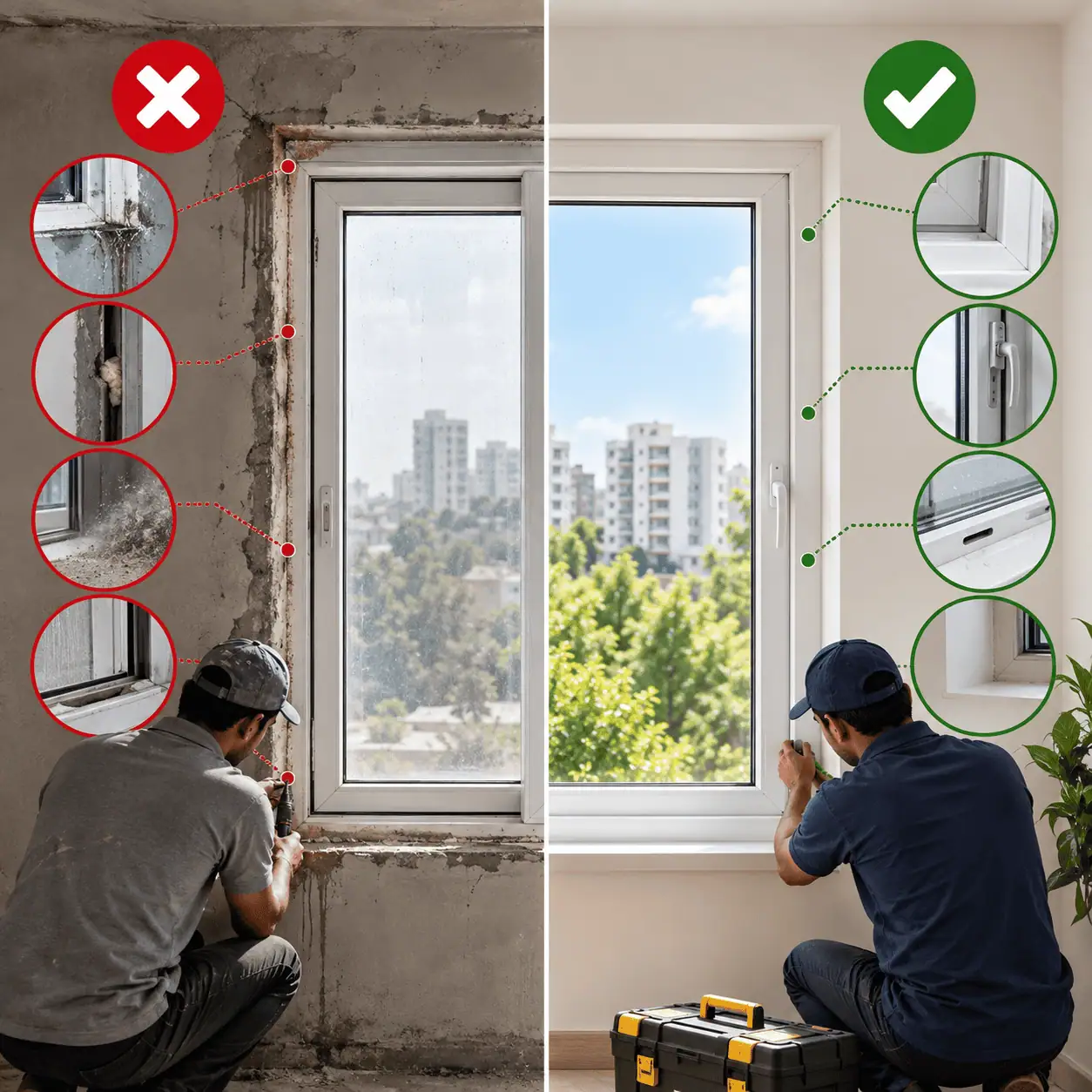
Installation: Accurate measurements, correct frame alignment and proper hardware adjustment are essential.
Glass selection: Choose suitable glazing based on your requirements for insulation, noise reduction, safety and natural light.
Maintenance: Hinges, locking components and moving parts should be checked and maintained periodically according to the manufacturer’s recommendations.
Considering these factors before installation can help you get the best out of your windows.
At Windowfort, we understand that every home has different requirements when it comes to ventilation, design and functionality.
Our uPVC tilt and turn windows combine a modern appearance with a practical dual-opening mechanism.
Some of their key features include:
Dual-opening functionality.
Multi-point locking systems.
Thermal insulation.
Noise reduction.
Easy cleaning and maintenance.
Weather-resistant uPVC construction.
Customisable designs for different applications.
Whether you are planning a new home, renovating an apartment or upgrading existing windows, Windowfort offers uPVC window solutions designed to complement modern living spaces.
Explore our product range here:
Windows are an important part of how a home looks, feels and functions.
While conventional sliding and casement windows continue to be popular, tilt and turn windows offer something different: the flexibility to control ventilation and enjoy a wider opening using a single window system.
From easier cleaning to flexible ventilation and modern aesthetics, they offer several practical advantages for today’s homes.
If you are looking for a window that combines functionality, convenience and contemporary design, tilt and turn uPVC windows are certainly worth considering.
A better window isn’t just about how it looks. It’s also about how well it works for your everyday life.
Explore the possibilities with Windowfort and find the right uPVC window solution for your home.